

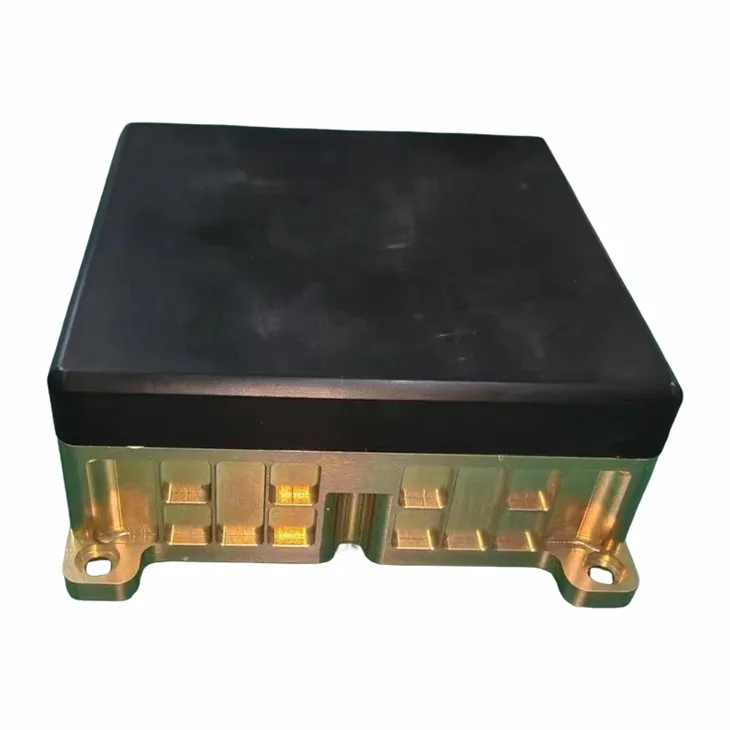


Product Description
This 4 Elements Anti-Jamming Terminal is highly integrated with BDS B1 and GPS_L1 GLO_G1, and GAL_E1 reception frequency point signal processing modules, and has the characteristics of low noise coefficient, high gain, good element consistency, and small mutual coupling;
By adopting spatio temporal joint adaptive anti-interference technology, it can achieve three broadband interference resistance functions and achieve high-precision positioning and precise timing under strong interference conditions.
It can be widely used in fields such as mobile vehicles, airplanes, and unmanned platforms, significantly improving its anti-interference performance.
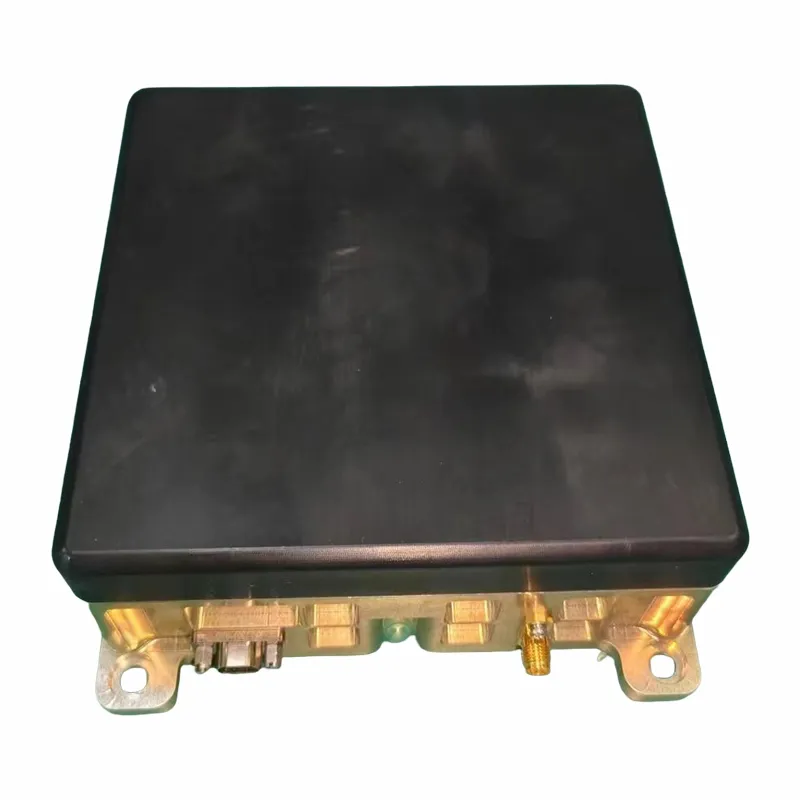

Special Features
● Recapture_time :≤ 6s
● Positioning_accuracy:≤ 10m
● Speed_accuracy:≤ 0.2m/s
● Reliability_MTBF≥ 5000 hours
|
MAIN SPECIFICATIONS |
|
|
antenna array |
4 B1. L1.G1 and E1 antenna arrays |
|
anti burning ability |
≥ 2W |
|
channel noise coefficient |
< 1.7 dB |
|
positioning system |
BDS, GPS,GLO and GAL positioning, signal reception, decoding, and output |
|
supported bands |
BDS B1:1561.098 MHz ± 2.046 MHz; GPS L1:1575.42 MHz ± 1.023 MHz;GLO1601.5MHz±8.5MHz;GAL 1575.42MHz±12.276MHz |
Technical Parameters
|
RF SPECIFICATIONS |
||||
|
positioning accuracy |
≤ 10m |
|||
|
speed accuracy |
≤ 0.2m/s |
|||
|
ELECTRICAL SPECIFICATIONS |
||||
|
power consumption |
≤ 12W |
|||
|
recapture time |
≤ 6s |
|||
|
ENVIRONMENTAL SPECIFICATIONS |
||||
|
temperature operational |
-40°C to +55°C |
|||
|
temperature storage |
-45°C to +60°C |
|||

Applications
- Mobile vehicles
- Airplanes
- Drone or UAV
- Unmanned platforms
FAQ
Q1: What is used for an anti-Jamming terminal?
A1: It can be widely applied in fields such as mobile vehicles, aircraft, and unmanned platforms, demonstrating excellent navigation anti-jamming performance.
Q2: How does an anti-Jamming terminal work?
A2: Hardware anti-Jamming: Adopting shielding design, filtering circuits, directional antennas, etc. to reduce external interference.
Software anti-Jamming: Identify and filter interference signals through algorithms such as frequency hopping, spread spectrum, and signal encryption.
Q3: What technologies are primarily employed by terminals to achieve anti-jamming?
A3: Spatial domain Anti-jamming:
Adaptive nulling antenna: Through a multi-antenna array, it forms an antenna pattern "null" in the direction of the interference source, thereby suppressing the interference signal in that direction.
Power domain Anti-jamming:
Increase signal power to overwhelm interference in the "noise" battle (the simplest but most power-consuming, and easy to be exposed).
Service
- Technical customization support
- 7x24 technical response
- On site testing
|
RF SPECIFICATIONS |
||||
|
positioning accuracy |
≤ 10m |
|||
|
speed accuracy |
≤ 0.2m/s |
|||
|
ELECTRICAL SPECIFICATIONS |
||||
|
power consumption |
≤ 12W |
|||
|
recapture time |
≤ 6s |
|||
|
ENVIRONMENTAL SPECIFICATIONS |
||||
|
temperature operational |
-40°C to +55°C |
|||
|
temperature storage |
-45°C to +60°C |
|||
Hot Tags: 4 Elements Anti-Jamming Terminal (SH-K130 ), manufacturers, suppliers, producers, design, customized, development, satellite, advanced, Remote Sensing Demodulator


